
1
Organize the portfolio
Create properties or standalone units, add tenants, and connect them through leases.
Digital rent ledger
RentPayor links each unit and tenant to a lease, then connects every invoice, recorded payment, credit application, and receipt to that rental account.
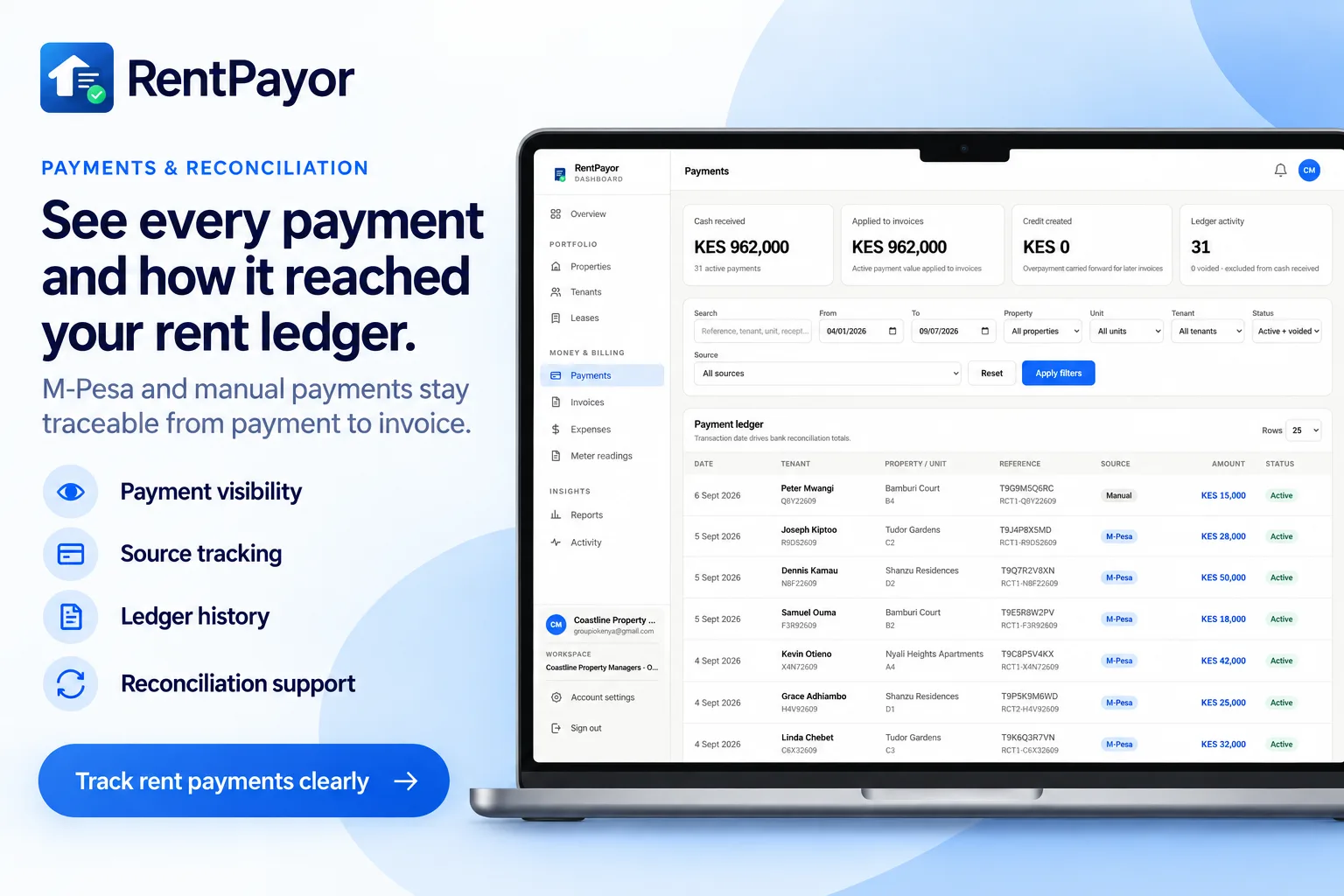
The rent-record problem
A landlord may need to confirm the billing period, due date, amount billed, amount paid, payment reference, outstanding balance, property, and unit. RentPayor keeps those details together rather than relying on a paper receipt book or scattered notes.
What RentPayor does
Every rent record points to the responsible tenant and rented unit.
Store rent, deposit, service charge, currency, due day, billing cycle, grace period, and optional late penalty.
Review payments applied to the invoice and credits carried forward from earlier overpayments.
Find open or settled invoices using the details a landlord is most likely to remember.
How it works
Create properties or standalone units, add tenants, and connect them through leases.
Each billing period creates an invoice with rent, service charge, deposit, adjustments, credits, payments, and outstanding balance.
Recorded payments remain in invoice activity and each payment has a retrievable receipt.
Frequently asked questions
RentPayor is primarily a landlord rent-tracking application. It records rental invoices, payments, expenses, arrears, and summary information, but it is not presented as a replacement for professional accounting advice or statutory accounting software.
Yes. A unit can exist without being assigned to a named property, and the app identifies it as a standalone unit.
Yes. Each recorded payment can be reopened from invoice activity and exported as a PDF receipt.
Use the integrated M-Pesa flow for eligible KES invoices, or record payments received through another method manually. RentPayor keeps balances, history, credits, and receipts connected to the invoice.